The AI-native transparency platform for government.
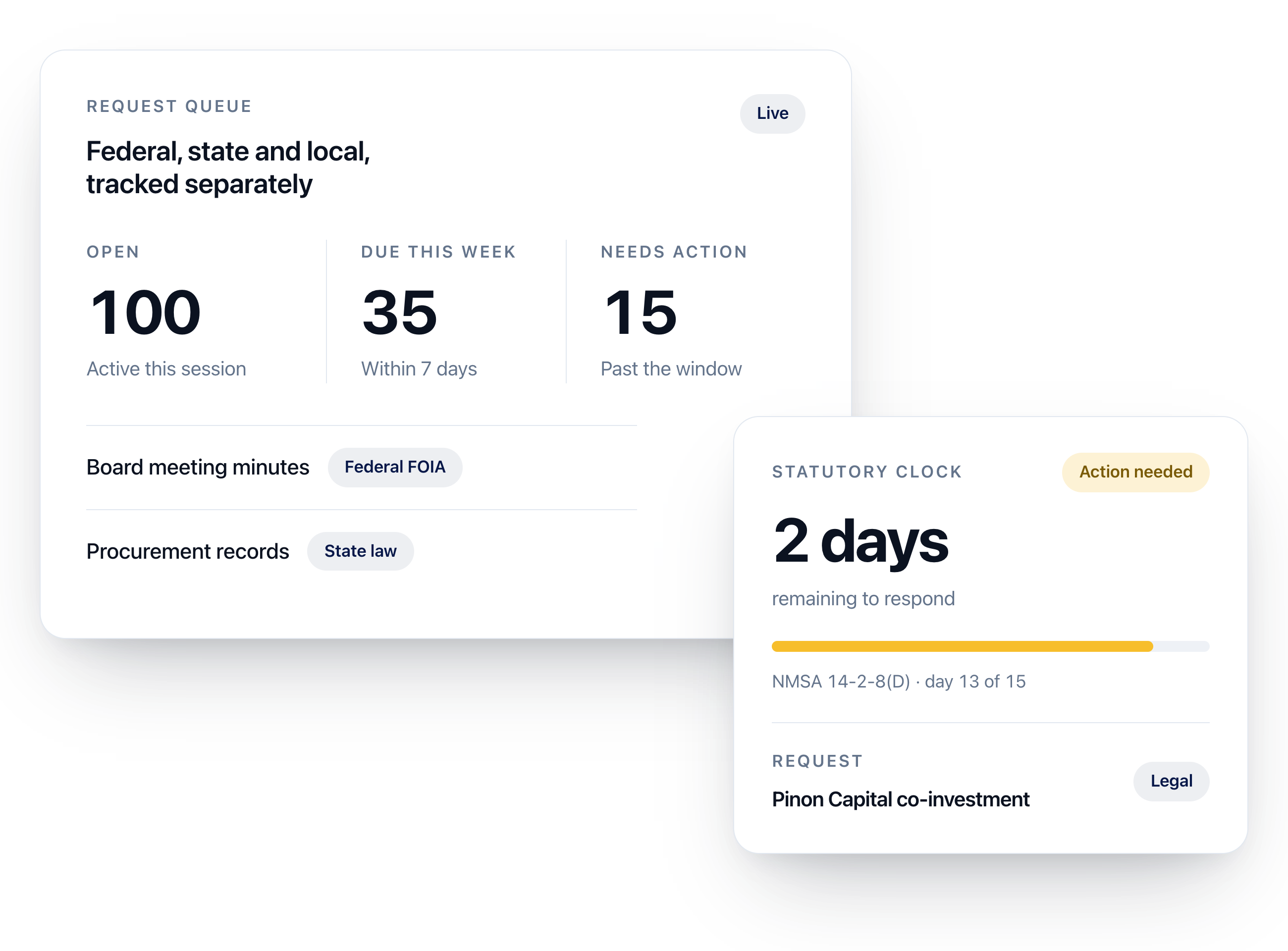
Being late is a violation. Missing a record is worse.
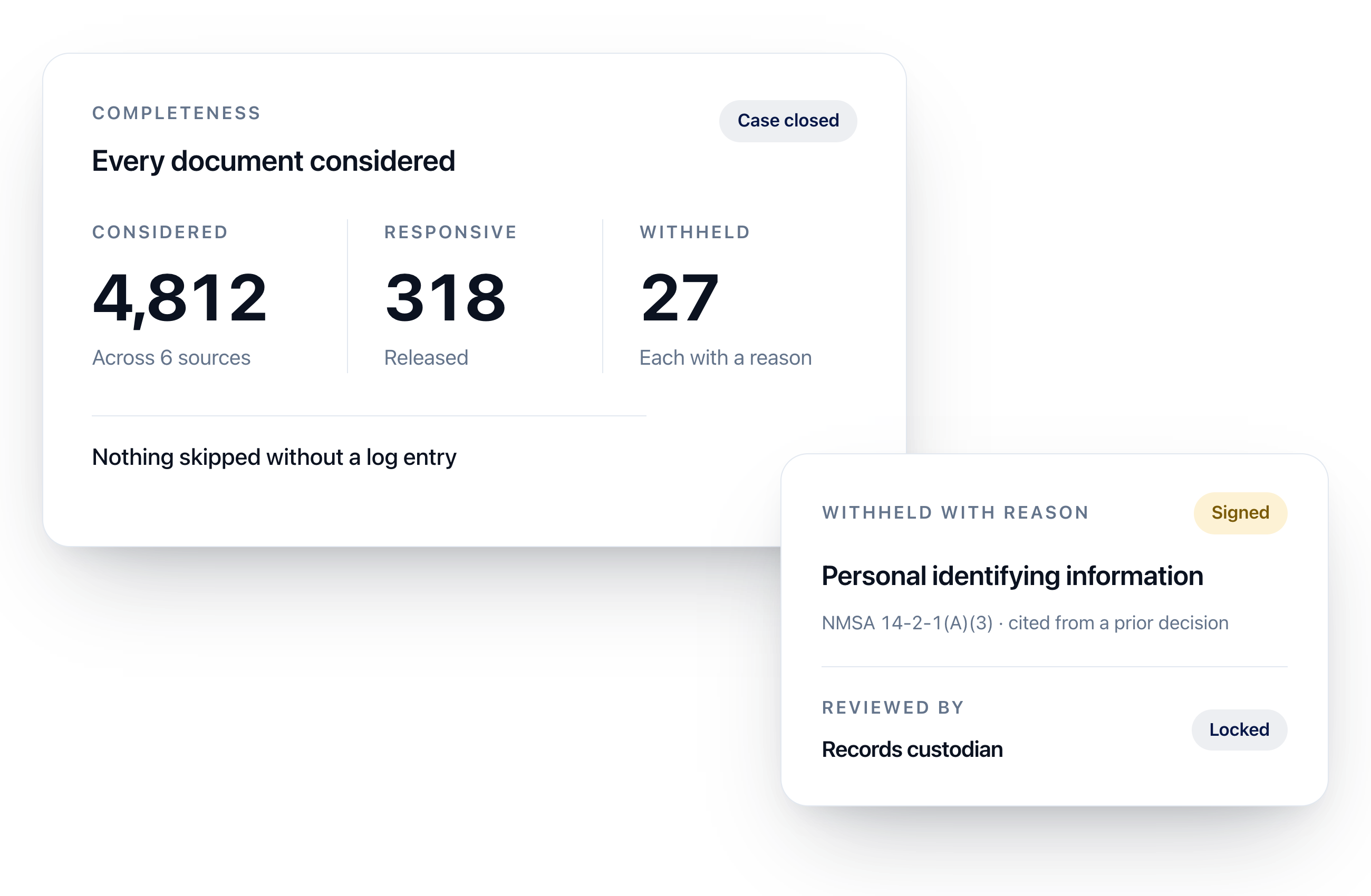
A responsive record is missed, and surfaces later in court.
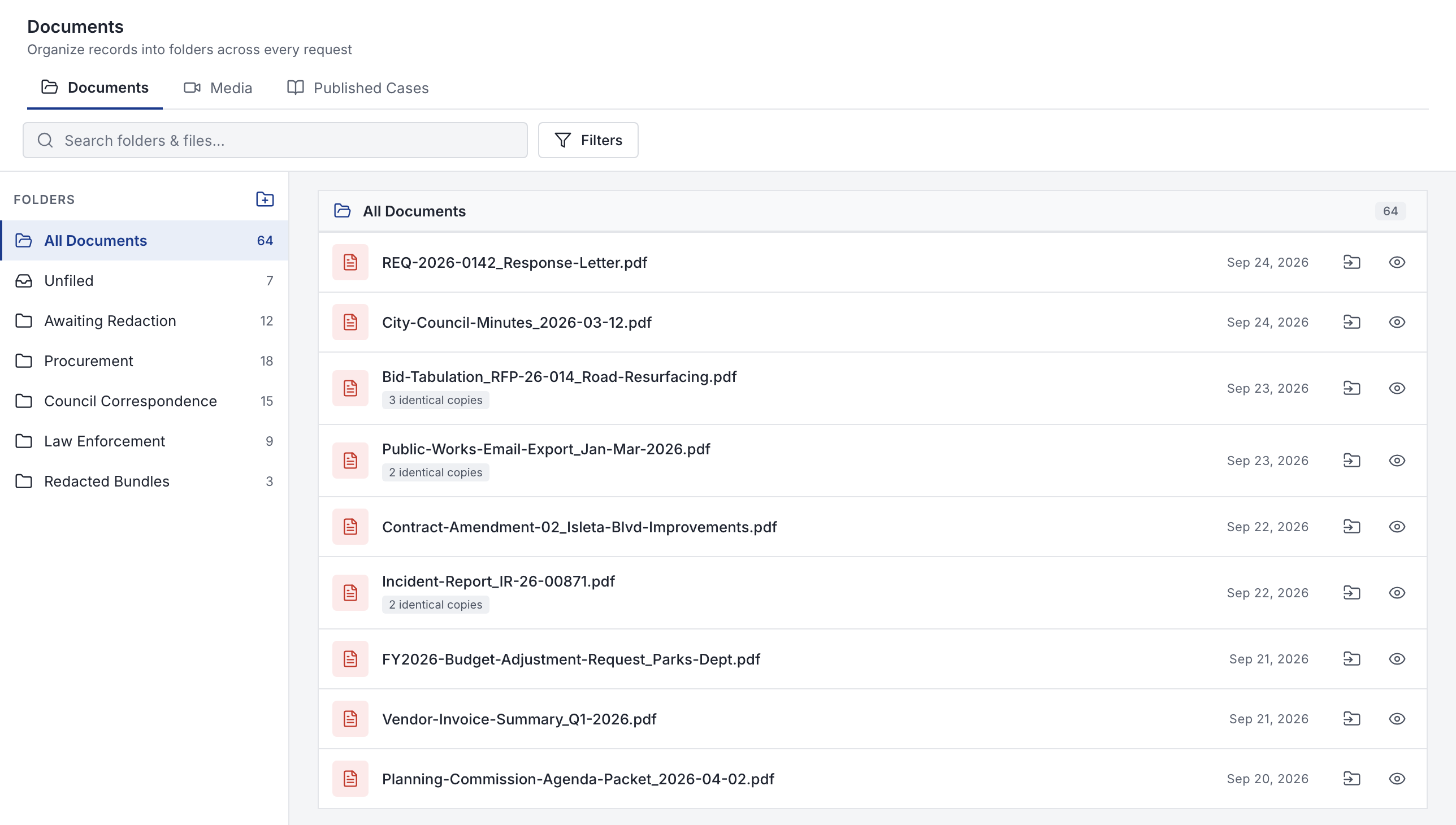
One sweep across every mailbox, cloud storage and body-worn camera footage.
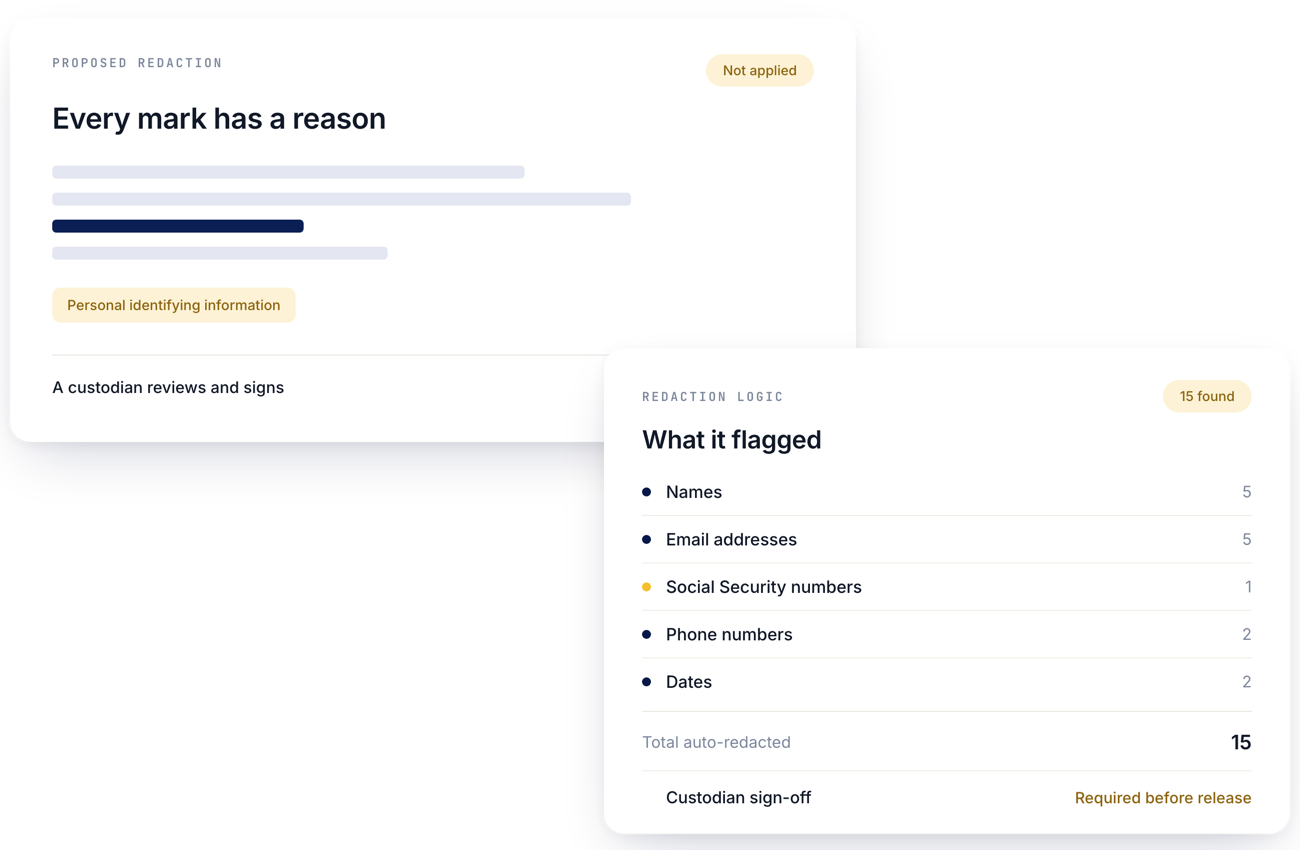
The redaction covers the text without removing it.
The content is removed from the file, so there is nothing left to recover.
You learn a request is late after the deadline has passed.
Every request shows on track, at risk, overdue or met, against both clocks.
What you withheld is challenged, and the reasoning is reconstructed afterwards.
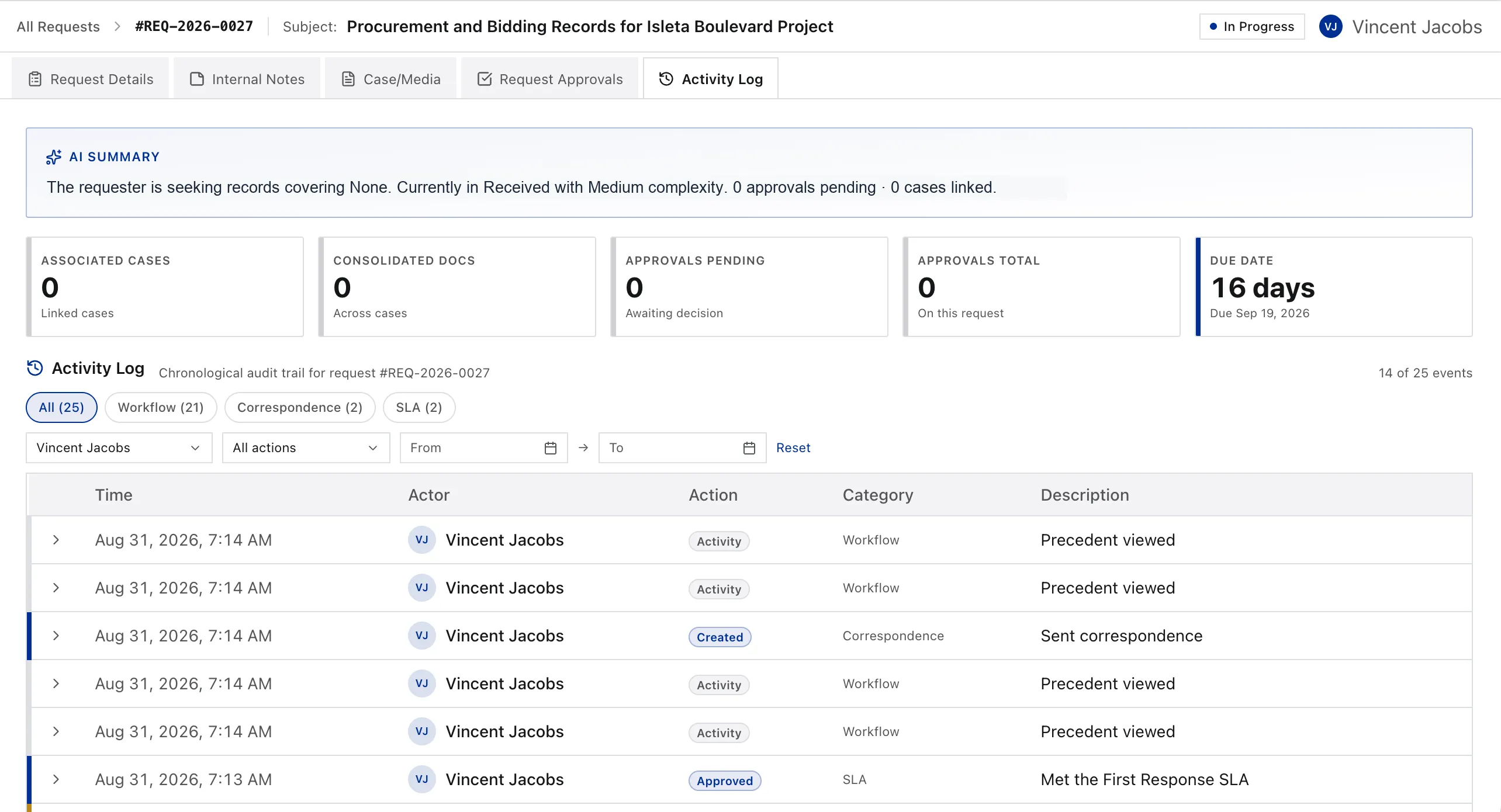
An append-only log of every action, with the actor, the time and the IP address.
Public records, from intake to release.
Every request is tagged to the law that governs it: federal FOIA, a state public records law, or a local ordinance. Govflo tracks all three separately.
Govflo proposes. Your team decides. AI-powered. Human-controlled.
Tagged to the law that governs it.
Built from your agency's precedent.
Gathered from your mailboxes and systems.
Drafted, with the exemption cited.
Your custodian reviews and approves.
The package goes out, trail assembled.
One request, four desks.
Ask once, then watch it move.
Most of what a records office answers is someone asking where their request stands. The portal answers it for them.
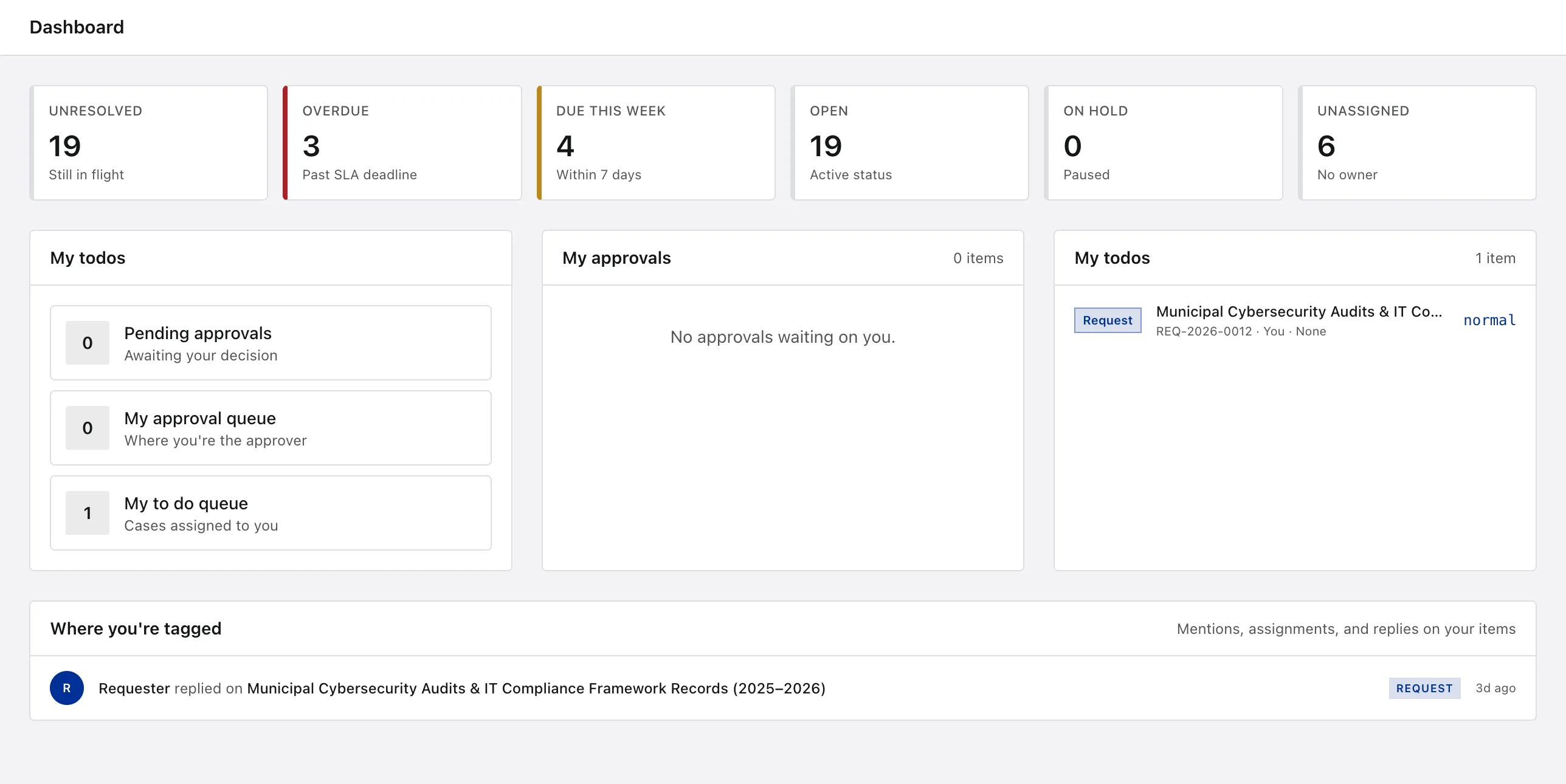
The queue, the clock and the reason in one place.
This is the desk that carries the work. Every request sits in one queue, each one measured against the statutory profile for the law that governs it.
The person who did the work is not the person who signs it off.
In a dispute, who authorized a release needs an answer separate from who performed it. That is what the approver role is for.
Set the rules once, then let them run.
The statutory profile, business hours, the approval workflows and the portal are configured once and read by every request afterwards.
Find everything that is responsive.
Redactions you can defend.
The Precedent Library.
Your own decisions build the library. Every redaction your team approves and every exemption you cite adds to it. The knowledge that usually sits with one experienced officer becomes something the whole office can draw on.
A person still decides. The library shows what the office decided last time. It does not decide this one.
A record that holds up in court.
Open meetings, handled the same way.
The statutory profile.
A baseline reference for your jurisdiction, not legal advice. Your counsel verifies it before go-live.
A baseline reference for your jurisdiction, not legal advice. Your counsel verifies it before go-live.
Made to withstand scrutiny.
It is still a suggestion. Nothing is withheld or released on the strength of a proposal alone. A reviewer accepts what is right and rejects what is not, and a rejected proposal is recorded as rejected rather than quietly dropped.
That split is deliberate. Whether an exemption applies to a particular record is a legal judgment. It stays with the person who is accountable for it. Govflo makes that judgment quicker to reach and easier to defend. The record shows what was proposed, what was decided, and who decided it.
If the file comes back clean it can move toward release. If it does not, it stops and waits for a person.
There is no setting that turns this off. Govflo is built to defer to a person rather than release material it cannot verify.
It stays yours. It is never shared with another agency and never used to train a shared model.
No data is retained by the language model and nothing is fed back into training.